


Shielded cables for motor connection cables, especially for frequency inverters and servo drives, insulated through the entire polyurethane (PUR) jacket and TPE/HGI core make them suitable for drag chains, especially for extremely harsh operating environments and in the presence of corrosive coolants and lubricants.
Our address
Room 3404, Runfeng Building, Sanqiao Street, Fengdong New City, Xi 'an, Shaanxi Province
Phone Number
+86 18192366268
maoxiaojing@sxwqgb.com
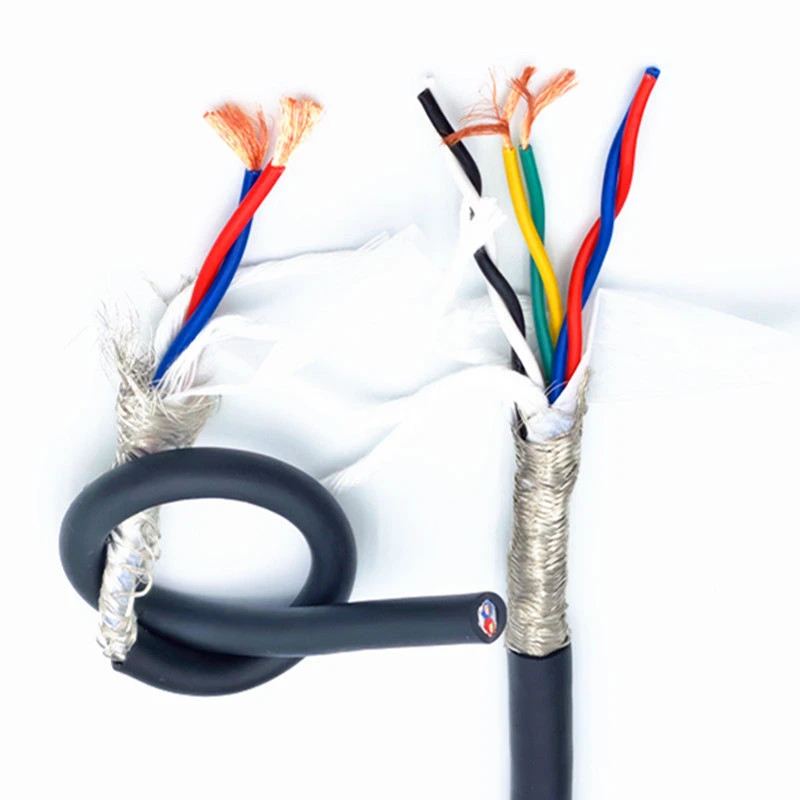
Shielding is to ensure that there is electromagnetic interference in the environment of the system's transmission performance, where the interference resistance should include two aspects, that is, the ability to resist external electromagnetic interference and the ability of the system itself to radiate electromagnetic interference to the outside. Theoretically speaking, in the cable and connectors on the outside of a layer of metal material shielding layer, can effectively filter out unwanted electromagnetic waves (which is also the vast majority of shielding system used by the method), however, the effective degree of this method in the end how? For the shielding system, a single layer of metal shielding layer is not enough, it is more important that the shielding layer must be completely well grounded, so that the interference current can be effectively channeled into the earth.
However, the actual construction of the shielding system, there are some non-negligible difficulties: due to the shielding system on the harsh requirements of grounding, it is very easy to cause poor grounding, such as grounding resistance is too large, grounding potential is not balanced, etc., so that in the transmission system between a two-point will produce a potential difference, which in turn produces a metal shielding layer of current, resulting in discontinuity of shielding layer, destroying its integrity.
At this point, the shield itself has become one of the largest sources of interference, thus leading to its performance is far worse than the unshielded system. Shielded wires need to be grounded at both ends for high-frequency transmission, which is more likely to generate potential differences in the shielding layer. Thus, the requirements of the shielding system itself constitute the biggest obstacle to ensuring its performance. A complete shielding system requires everywhere shielding, once any point of shielding can not meet the requirements, are bound to affect the overall transmission performance of the system.
Scope of Application
-
Shielded cables for motor connection cables, especially for frequency inverters and servo drives, insulated throughout with polyurethane (PUR) jackets and TPE/HGI cores for drag chains, especially for extremely harsh operating environments and in the presence of aggressive coolants and lubricants.
Product Characteristic
Highly resistant to internal and external noise, braided shielding for continuous flexible use, high repeated bending strength, good resistance to compression and curling, low adhesion, abrasion and tear resistance, resistance to hydrolysis, microorganisms and corrosion, resistance to weathering, oxygen and UV rays (under normal light conditions), good durability and resistance to salty liquids, good resistance to coolants and lubricants. Large area resistant to mineral oils, animal fats, non-alcoholic gasoline and kerosene (see Technical Information), contains no substances that can damage the varnish (LABS-free), RoHS-compliant.
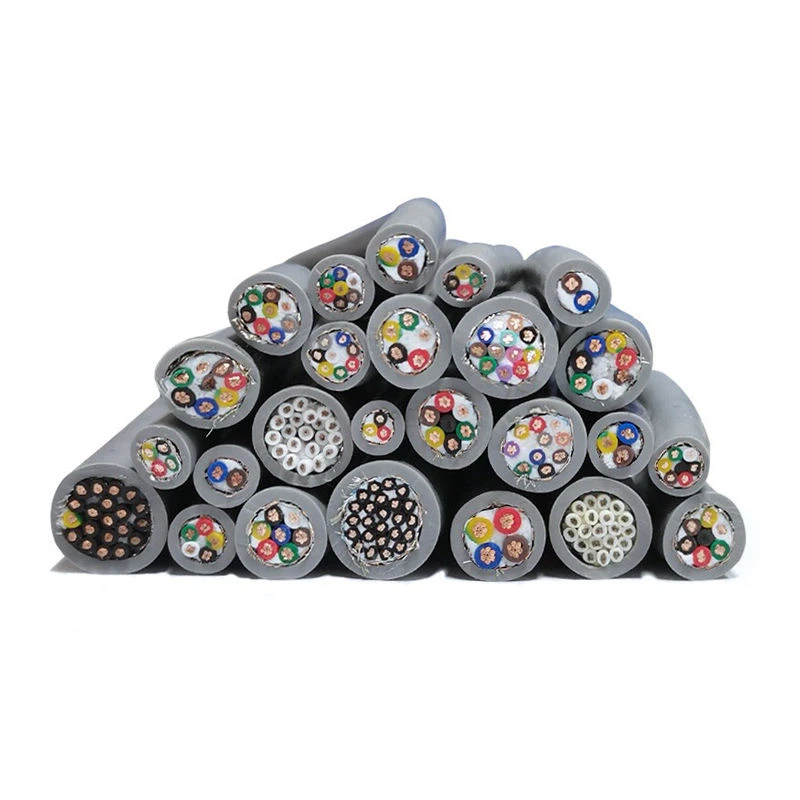
Shielded cable is a type of cable used to transmit electrical energy, information and to realize electromagnetic energy conversion, with strong shielding capability, suitable for specific needs in fixed situations.
Below are some key parameters and characteristics of shielded cables:
Applicable voltage: Shielded cables are usually rated at 450/750V and below and are suitable for control or monitoring circuits and protection lines.
Operating temperature: The long-term permissible operating temperature of the conductor usually does not exceed 70°C, while some specific types of shielded cables, such as shielded cables insulated with polyperfluoroethylene propylene (PFPE) (F46) insulation, can reach a maximum operating temperature of 200°C or 260°C.
Installation and Laying: The temperature of cable installation and laying should not be lower than 0 ℃, some specific materials sheath cable (such as fluorine plastic, silicone rubber and nitrile sheath) the minimum ambient temperature requirements are more stringent, such as non-fixed laying, fluorine plastic sheath of the minimum ambient temperature of -15 ℃.
Bending radius: the allowable bending radius of the cable varies according to the material and structure of the cable, the minimum bending radius of the non-armored cable should be not less than 6 times the outer diameter of the cable, while the minimum bending radius of the copper tape shielded or steel tape armored cable should be not less than 12 times the outer diameter of the cable.
Shielding effect: One of the main uses of shielded cables is to prevent electromagnetic wave interference, through the design of the shielding layer to reduce the interference of external signals on internal signals, as well as to reduce the interference of internal signals on the outside world.
There are various types of shielded cables, including but not limited to shielded control cables, shielded sheathed wire and cable, shielded control cables, etc., which have different requirements in terms of long-term operating temperature, applicable voltage, installation and laying conditions. Choosing the right shielded cable needs to be decided based on specific application scenarios and needs.
If You Want To Know For Further Information , Please Feel Free To Contact Us At Maoxiaojing@Sxwqgb.Com


