


Welding Cable
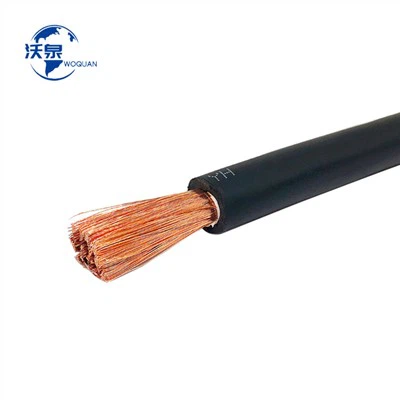
Welding cable is a type of electrical cable that is used for connecting welding machines to their power sources. It is made from many small, thin strands of copper or aluminum wire that are insulated with a rubber or plastic coating. The insulation is designed to protect the wire from heat and sparks generated during the welding process. The high strand count helps ensure that the welding cable remains flexible. Flexible welding cable is designed to be both pliable and durable, and it is often used in industrial and commercial welding applications.
Benefits of Welding Cable
Absorbing High Voltage
These welding cables have high tensile strength and are manufactured keeping in consideration about it use. These welding cables are built strongly so that they don' t gets heated fast as the current is transferred through these welding cables is of high voltage.
Multi-Purpose
Welding cables are multi-purpose in nature. Welding cables are used in different areas such as construction sites, electrical fittings, power transformers and etc. With its durability and toughness welding cables can be used both in interior and exterior use.
Transport
India has been blessed with Metro recently and welding cable India helps in smooth running of it. All the compartments are attached with the engine through heavywelding cables for smooth functioning of electric trains. Welding cables are also fitted in motorcars and aircrafts.


Product Categories
Latest Products


Why Choose Us
Quality assurance
Our goal is to be the best and to keep raising the bar. We believe these ideals can be achieved through focused teamwork, taking pride in our work, quality-controlled systems, and by attracting and training the best people. The result of our efforts must be a satisfied client.
Customization services
We understand that each customer's requirements are unique, and thus, we provide customization services. We are very glad to closely collaborate with customers, understand their specific needs, and provide tailored solutions accordingly.
World-wide expertise
We know international markets and trends. Our expertise, experience and network cover all corners of the world.
Efficient and convenient
The company has established marketing networks around the world to provide high-quality services to customers in an efficient and convenient manner.
Competitive pricing
We strive to maintain competitive pricing, offering customers audio and video accessories that deliver high value for their investment.
Technical expertise and support
Our team possesses extensive technical expertise to provide comprehensive support and solutions to customers. Regardless of the technical challenges or inquiries customers face, we are willing to listen and offer professional advice and guidance.
MIG welding is one of the most efficient and popular methods of welding used today. Because the welding wire is fed through the electrode this allows welders to work longer and have a higher level of productivity than welders using a different welding method. A MIG welding gun feeds wire into the weld puddle to create a strong and solid joint. MIG guns have a liner that is used to guide the wire through the lead and out of the nozzle of the MIG gun. Your liner will become worn from long-term use or it may become damaged, we are going to walk you through the steps necessary to replace the liner.
The first thing you need to do is to make sure that the power switch on the welding machine is in the off position. Once that is done you should also disconnect the power supply and turn off the gas. It is for your safety that you make sure there is no source of power going to the welding machine; this will prevent you from accidentally getting shocked while you are working on the liner. The next thing you need to do is to back roll the welding wire inside the MIG lead and thread the wire through the holes on the spool to keep it from becoming loose.
Next, you will need to locate the nut that holds the MIG casing in place. Most internal spooled MIG machines have a door that will open and allow you to access the wire spool and MIG lead. If your welding machine is spooled externally you will need to lower the spool arm in order to release the tension on the nut. Once you have done that you can disconnect the trigger control from the MIG welding machine. The next thing you will have to do after locating and removing the nut is to pull the cup off of the MIG gun and set it somewhere safe. Now loosen the copper tip using needle nose pliers and put aside with the MIG cup. At this point you will need to remove the liner holder using an adjustable wrench. Now you can remove the worn liner using the pliers; pulling gently, the liner should slide out without a lot of pressure.
Now that the liner is out of the casing you should blow out the inside to remove any debris that may have become lodged inside the gun. If you do not properly remove any debris from the MIG gun your new liner will not allow the wire to feed properly. Now you can insert the new liner and slowly work it into place. If the liner should bind up in the MIG gun you should gently twist the liner while applying pressure forward to help release the bind. You should push the liner until it is about 3/4 inch over the MIG tube and cut off any excess liner using wire cutters.
Once you have properly inserted the new liner into your MIG gun you are now ready to reassemble the welding gun. Attach the MIG lead to the welding machine and reconnect the trigger control. Now thread the MIG wire through the drive rolls and into the end of the liner. At this point you are now ready to reconnect the power supply to the welding machine and turn it back on. Once your welding machine is powered up turn the wire speed on the MIG gun up and press the trigger until the wire exits the copper tip of the welding gun. Trim off any excess wire using the wire cutters and reset your welding machine to start welding again.
8 Safety Requirements for Welding Cables


1. The welding cable should have good electrical conductivity and an insulating outer layer. Generally, it is made of a copper core (multi-strand thin wire) wire outer rubber insulation sleeve, and the insulation resistance is not less than IMN.
2. Light and soft can be bent and twisted arbitrarily, easy to operate.
3. The welding cable should have good resistance to mechanical damage, oil resistance, heat resistance , and corrosion resistance.
4. The length of the welding cable should be determined according to the specific circumstances. Too long a voltage drop increases, too short The work is inconvenient, and the general cable length is 20-30mm.
5. Have an appropriate cross-sectional area. The cross-sectional area of the welding cable should be based on the size of the welding current. Selected. In order to ensure that the wire does not overheat and burn the insulation layer, the cable cross-section, and the maximum operating current.
6. If the welding cable is applied to the whole root, there should be no joint in the middle. If you need to use a short wire to connect, you must not exceed 2 connectors.
When connecting the cable, the connector should be firmly connected, and the connection should be well insulated.
7. It is strictly forbidden to use the metal mechanism, pipeline, track or other metal of the workshop as a guide.
Line use.
8. Do not place the welding cable next to the hot weld metal near the arc to avoid burning the insulation.
Floor. At the same time, it is also necessary to avoid rolling and abrasion. Welding cables are prohibited from coming into contact with flammable materials such as oil and grease.
Construction Of Welding Cables
Conductor
The conductor material preferred for use as a conductor is high-quality copper. The conductor is finely stranded copper, allowing maximum flexibility and conductivity. It allows the welder to easily manoeuvre the cable during operation.
The system used for measuring copper strands is AWG, American Wire Gauge. Lower AWG numbers indicate thicker strands and higher electrical capacity. A cable with a higher strand count is preferable for welding applications as it allows better flexibility and durability.
Insulation
The cable uses rubber or synthetic insulation. Neoprene and EDPM rubber is the most common insulation used for welding cables. These materials offer excellent resistance to heat, oil, and abrasion. It makes them suitable for harsh environments in which welding takes place. EDPM rubber is more flexible and has a higher temperature resistance than neoprene.

Various Applications Of Welding Cables
Arc Welding
In arc welding, an electric current passes between an electrode and the workpiece, creating an intense heat source. It melts the base metal and filler material to form a weld. The welding cable helps supply electric current to the electrode holder or welding torch. The welding cable type we use for the process must handle high amperage and required voltage.
MIG and TIG Welding
The MIG and TIG welding process requires a welding process to supply power to the welding torch. In the MIG welding process, the welding cable supports delivery power to the wire feed system. In TIG welding, the cable supplies power to the tungsten electrode. MIG and TIG welding processes require lower amperage and voltage than arc welding processes. The cable should meet the specific power requirements of the welding machine.
Plasma Cutting
The plasma-cutting process involves the use of an electrically conducive gas to generate a high- temperature plasma arc. It gets further used to cut through the metal. Welding cables supply the necessary power to the plasma torch. The cable can handle high voltage and required current for plasma cutting operations.
Key Considerations When Selecting Welding Cable
The amperage rating of a welding cable determines the maximum electrical current it can safely carry. It is essential to select a cable with an amperage rating that meets or exceeds the requirements of your welding machine to prevent overheating and potential damage to the cable. The cable' s cross-sectional area, which is typically measured in AWG, is a crucial factor in determining its amperage capacity.
The length of the welding cable can affect its overall resistance, which may lead to a voltage drop and reduced welding performance. It is essential to use the shortest possible cable length for your application while still allowing for sufficient mobility during welding operations. In cases where longer cable lengths are unavoidable, it may be necessary to use a larger AWG size to compensate for the increased resistance.
Flexibility is a critical factor in welding cable selection, as it directly impacts the welder' s ease of movement and maneuverability. A more flexible cable will generally have a higher strand count and use finely stranded copper conductors. The insulation material, such as EPDM or neoprene, also contributes to the cable' s overall flexibility.
The environmental conditions in which the welding cable will be used should also be considered. Factors such as temperature, exposure to chemicals or oil, and the risk of abrasion can affect the cable' s performance and longevity. Ensure that the chosen cable is designed to withstand the specific conditions of your welding environment to prevent premature wear and failure.

Market Research Intellect anticipates significant growth in the Welding Cable Consumption Market from 2024 to 2031. Driven by factors, this period presents lucrative opportunities for market expansion. Technological advancements and changing consumer behaviors will drive innovation and increase demand for Welding Cable Consumption products. Moreover, favorable regulatory environments and growing sustainability concerns will further stimulate market growth. Market Research Intellect projects a steady CAGR during this period, reflecting the market's robust potential. By aligning with emerging trends and implementing strategic initiatives, companies can strengthen their market position and capitalize on the evolving dynamics to achieve sustained growth and profitability.
Our Factory
Shaanxi Woquan Trading Co., Ltd. was established in 2016, specializing in the manufacture of cables and wires. The company built and expanded 80 acres (53,333 square meters) of factory buildings and new production line equipment. The company has more than 20 professional and technical personnel.
Our company is a professional wire and cable manufacture integrating research and development, production, sales, and services together. We specialize in developing and manufacturing PVC and XLPE insulation cables, building wires, power cables, armored cables, solar cable, silicone cables, rubber cables, specialty cables. At the same time, customized services of various special cables for customers in appreciated. Our products have certificated by CE, UL, SAA, ISO, TUV, CCC, and other certificates.


Certifications


FAQ
As one of the leading welding cable manufacturers and suppliers in China, we warmly welcome you to wholesale cheap welding cable for sale here from our factory. All customized products are with high quality and low price. Contact us for quotation and free sample.
Industrial Copper Flexible Rubber Welding Cable, 450V 750V Flexible Rubber Welding Cable, Welding Cable Flexible Copper Rubber Insulated