In today's power transmission and distribution systems, the selection and application of cables play a crucial role in the performance and safety of the entire system. Among numerous cable types, YJLV cable has become the preferred choice for many engineers and power experts due to its unique performance and wide range of applications. This article will provide you with an in-depth analysis of the characteristics, advantages, and application scenarios of YJLV cables.
Overview of YJLV cables
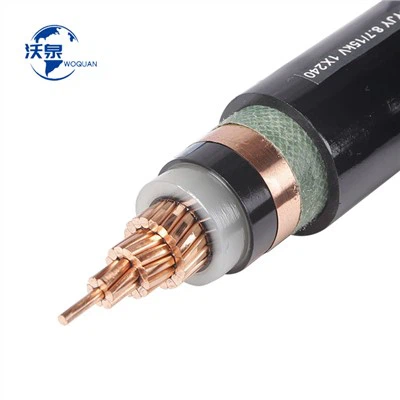
YJLV cable, also known as cross-linked polyethylene insulated polyvinyl chloride sheathed aluminum core power cable, is a high-quality cable product that integrates electrical performance, mechanical performance, and corrosion resistance. The cable uses aluminum core material as the conductor, cross-linked polyethylene as the insulation layer, and polyvinyl chloride as the sheath layer, forming a unique product structure. YJLV cables have been widely used in power engineering due to their excellent electrical performance, heat resistance, and corrosion resistance.
Characteristics and advantages of YJLV cable
Good electrical performance
Although the resistivity of aluminum core cables is slightly higher than that of copper core cables, their conductivity is still excellent and can meet most power transmission needs. Meanwhile, the insulation layer of YJLV cable is made of cross-linked polyethylene material, which has good insulation and heat resistance properties and can withstand high working temperatures and voltages, ensuring the safety and stability of power transmission.
01
Good heat resistance
Crosslinked polyethylene insulation materials have excellent heat resistance and can operate stably for a long time in high temperature environments. This makes the YJLV cable more secure and stable during power transmission.
02
Good corrosion resistance
Aluminum core cables have better corrosion resistance than copper core cables, especially suitable for corrosive environments such as marine and chemical industries. The sheath layer of YJLV cable is made of polyvinyl chloride material, which has good corrosion resistance and wear resistance, and can protect the cable from the influence of the external environment.
03
Low cost and light weight
Compared to copper core cables, aluminum core cables have lower costs and lighter weight. This gives YJLV cables significant advantages in engineering cost and installation transportation.
04
Good mechanical performance
The conductor of YJLV cable is made of aluminum core material, which has good mechanical properties such as high tensile strength and good bending performance. This allows the cable to adapt to different installation environments and usage conditions.
05
Application scenarios of YJLV cables
Outdoor cable engineering: YJLV cables are suitable for outdoor cable engineering and can withstand large mechanical loads and climate changes. Its excellent electrical performance and corrosion resistance enable cables to operate stably in harsh environments.
Corrosive environment: In corrosive environments such as marine and chemical industries, the corrosion resistance performance of YJLV cables has been fully utilized. It can improve the service life and safety of cables, and reduce maintenance costs.
Power transmission and distribution system: YJLV cables are widely used in power transmission and distribution systems as the main carrier of power transmission. Its excellent electrical performance and heat resistance ensure the safety and stability of power transmission.

| Parameter | Specification Range |
|---|---|
| Rated Voltage (U0/U) | 0.6/1kV, 1.8/3kV, 6/10kV, 8.7/15kV, 21/35kV, etc. |
| Conductor Material | Aluminum (AL) |
| Conductor Construction | Multi-strand fine aluminum wire |
| Conductor Cross-section (mm²) | 1.5, 2.5, 4, 6, 10, 16, 25, 35, 50, 70, 95, 120, 150, 185, 240, 300, 400, 500, etc. |
| Insulation Material | Cross-linked Polyethylene (XLPE) |
| Insulation Thickness (mm) | Depends on conductor cross-section and voltage rating |
| Jacket Material | Polyvinyl Chloride (PVC) |
| Jacket Color | Black or other colors (depending on requirements) |
| Cable Outer Diameter (mm) | Depends on conductor cross-section, insulation thickness, and jacket thickness |
| Cable Weight (kg/km) | Depends on conductor cross-section, insulation material, and jacket material |
| Conductor Resistance (Ω/km, 20℃) | Depends on conductor cross-section and conductor material |
| Current Carrying Capacity (A) | Differs for aerial and buried installations, specific values depend on conductor cross-section, voltage rating, and environmental conditions |
| Bending Radius (D) | For single-core cables, not less than 15 times the cable outer diameter; for multi-core cables, not less than 10 times the cable outer diameter |
| Laying Temperature (℃) | Not lower than 0℃ |
| Maximum Operating Temperature of Cable (℃) | Conductor temperature not exceeding 90℃, short-circuit temperature (duration not exceeding 5S) not exceeding 250℃ |
Our products are sold worldwide.We have a professional email system, you can leave a message at any time, and we will reply as soon as possible. Contact us for more detailed information: Email:Postmaster@Sxwqgb.Com

Certification

Packing And Shipping

FAQ
1. What does the model designation "YJLV" stand for?
A: YJLV is the Chinese standard model code. YJ stands for cross-linked polyethylene (XLPE) insulation, L for aluminum conductor, and V for PVC outer sheath. The full name is aluminum conductor, XLPE-insulated, PVC-sheathed power cable.
2. What does the voltage rating 0.6/1 kV mean?
A: The rating 0.6/1 kV defines two voltage levels: 0.6 kV is the rated voltage between conductor and earth (U₀), and 1 kV is the rated voltage between phase conductors (U). This cable is designed for low-voltage power distribution systems up to 1 kV.
3. What conductor sizes and core configurations are available?
A: This cable is available with cross-sections from 10 mm² up to 400 mm² and 1 to 5 cores. Common configurations include 3-core, 4-core, and 5-core versions (e.g., 3×50+2×25, 4×240, 5×16).
4. What are the temperature limits for this cable?
A: The maximum continuous operating temperature for the conductor is 90°C. Under short-circuit conditions (duration ≤5 seconds), the conductor can withstand up to 250°C. The minimum installation ambient temperature is 0°C – if lower, the cable should be preheated before installation.
5. Where is this cable used, and what are the key installation considerations?
A: YJLV cable is suitable for fixed installations in power distribution networks, industrial plants, commercial buildings, substations, and cable trays. Key points: use copper-aluminum transition terminals when connecting to copper equipment to prevent electrochemical corrosion, apply anti-oxidation paste on exposed aluminum surfaces, and follow the minimum bending radius (not less than cable outer diameter × 15 for multi-core unarmoured cables.
If you have any needs, please feel free to contact us
cable@sxwqgb.com
+8613892838980
Room 3404, Runfeng Building, Sanqiao Street, Fengdong New City, Xi 'an, Shaanxi Province
Hot Tags: YJLV 0.6/1KV 10-400mm² 1-5 Cores Aluminum Core Power Cable, China YJLV 0.6/1KV 10-400mm² 1-5 Cores Aluminum Core Power Cable manufacturers, suppliers, power distribution cable, underground power cable, overhead power cable, medium voltage power cable, high voltage power cable, low voltage power cable